


The digital transformation of the logistics sector has brought with it a growing ecosystem of technological solutions designed to optimize industrial processes. In this context, ERP (Enterprise Resource Planning) systems and WMS (Warehouse Management Systems) stand out as key—but not interchangeable—tools. Confusion between the two is common, even among experienced professionals, which can lead to incorrect technological decisions with a direct impact on operational efficiency and profitability.
This article aims to provide a clear, rigorous, and practical overview of the differences between ERP and WMS, analyzing their functionalities, logistical applications, and key criteria for choosing between them. It also explores how these platforms integrate with the industrial storage systems offered by AR Racking, enhancing operational competitiveness.
At AR Racking, we understand that choosing the right technology not only improves logistical performance but also enables more agile, secure, and responsive inventory management aligned with today’s supply chain demands.
ERP: functionalities, advantages, and logistical limitations
The ERP serves as the central system for enterprise resource planning. Its purpose is to integrate all key business processes into a single platform: finance, purchasing, sales, accounting, human resources, and, in some cases, logistics. It acts as the backbone of corporate information, providing a global view of the business.
In the logistics field, an ERP can manage purchase orders, production planning, batch traceability, cost control, and demand forecasting. However, its operational scope inside the warehouse is limited. It does not precisely manage aspects such as the exact location of products, task sequencing for picking, or dynamic allocation of warehouse resources.
The main strength of the ERP lies in its ability to consolidate information and provide complete administrative traceability, but it is not designed to coordinate the physical movement of goods or optimize daily warehouse operations.
From an efficiency and operational control perspective—especially in complex industrial environments—the ERP needs the support of a specialized WMS to complete logistical management.
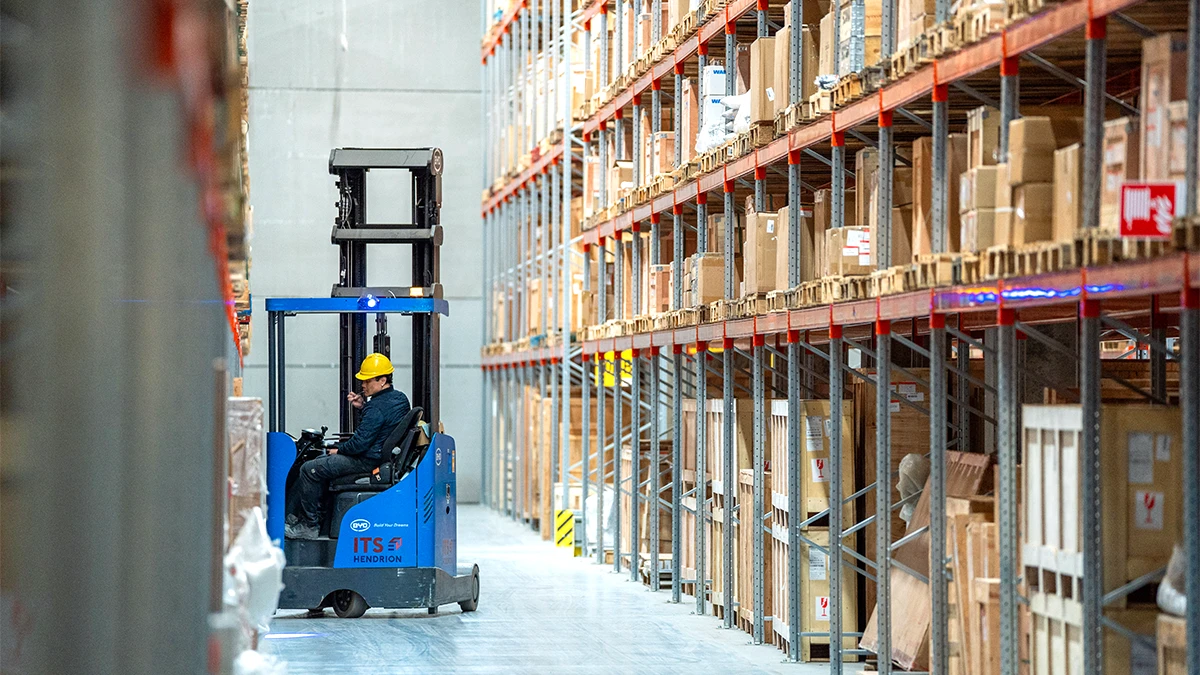
WMS: technical and operational focus for high‑performance warehouses
The Warehouse Management System (WMS) focuses exclusively on the control, optimization, and traceability of operations carried out inside the warehouse. Its primary objective is to maximize space utilization, reduce handling times, improve inventory accuracy, and ensure the physical traceability of products.
The WMS manages, in granular detail and in real time, processes such as:
- Receiving and validating goods
- Dynamic slotting based on logistical criteria (rotation, weight, compatibility)
- Picking strategies: wave picking, zone picking, order picking
- Cycle counting and inventory control
- Preparation of shipments and cross‑docking
- Integration with mobile devices, RFID, and automation systems
Compared to an ERP, the WMS provides a far more detailed operational view and enables real‑time decision‑making, improving stock management and operator productivity. Its precision in handling daily operations makes it indispensable for warehouses with high rotation, multiple SKUs, and demanding environments such as food, automotive, or pharmaceuticals.
Typical use cases: When is an ERP needed? When is a WMS essential?
The choice between ERP and WMS should not be seen as an either‑or decision, but rather as a logical sequence based on the specific needs of the business.
An ERP is essential when a company needs to unify all processes under a single platform. It is especially useful for organizations seeking global control of their resources, including finance, purchasing, and sales.
A WMS becomes indispensable when the volume, complexity, or criticality of warehouse operations requires precise, real‑time control. Companies with multiple SKUs, several warehouses, rotating shifts, or pronounced seasonal peaks will find the WMS a key tool for maintaining efficiency.
In advanced industrial environments, the recommended approach is to implement both systems in an integrated manner: the ERP manages macro‑processes, while the WMS orchestrates warehouse operations.
Technical and operational comparison: ERP vs. WMS
At a technical and functional level, there are significant differences between an ERP and a WMS:
- Primary purpose: ERP centralizes enterprise management; WMS optimizes warehouse operations.
- Level of detail: ERP manages aggregated information; WMS works at load‑unit and location level.
- Response time: ERP typically operates in batches; WMS requires real‑time processes.
- Traceability: ERP provides administrative traceability; WMS offers physical traceability.
- Operator interface: WMS integrates with RF devices, pick‑to‑light, or voice systems; ERP is not designed for direct field interaction.
These differences justify the need to combine both systems, allowing each to contribute its specific value without overlaps or gaps.
Impact of both systems on AR Racking storage solutions
The proper integration of ERP and WMS has a direct impact on the performance of industrial storage systems. AR Racking designs and manufactures optimized solutions for modern operations that can fully leverage this technological integration.
The following AR Racking storage systems are fully compatible with WMS‑driven operations, providing efficiency, traceability, and adaptability:
- Adjustable Pallet Racking: ideal for selective picking and direct access controlled by WMS.
- Drive in Drive Through Racking: compatible with WMS‑assisted LIFO or FIFO logic.
- Live Storage Pallet Racking (FIFO): allows integration with sensors and automated replenishment rules.
- Pallet Shuttle: software‑controlled and coordinated with WMS for intelligent storage routes.
- Warehouse with stacker cranes for pallets: maximum automation, requiring full WMS integration.
- Miniload AS/RS System: especially useful for small, high‑rotation items managed by software.
By linking these physical systems with digital solutions such as WMS and ERP, companies achieve superior logistical efficiency, reduced human error, and optimized resource usage.
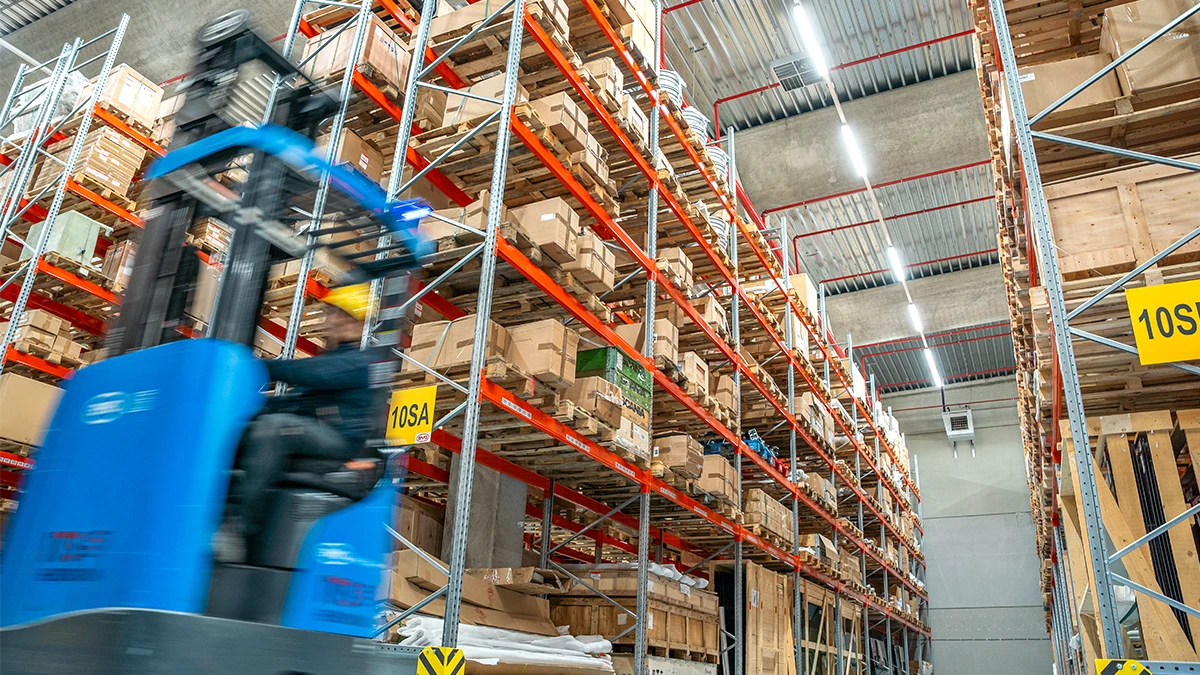
Guide to successful integration: phases, criteria, and best practices
Integrating an ERP and a WMS is not an immediate process. It requires planning, strategic alignment, and deep knowledge of logistical workflows.
Recommended phases include:
- Functional analysis: Identify key logistical flows and warehouse needs.
- Technology selection: Choose ERP and WMS systems that allow smooth integration (open APIs, standard connectors).
- Process modeling: Define how both systems will communicate (inventory ownership, task validation).
- Integrated testing: Simulate real operational scenarios to validate performance.
- Operational training: Ensure operators and managers understand the tools and protocols.
A progressive implementation, supported by expert integrators and robust storage solutions, maximizes the chances of success and return on investment.
The future of ERP–WMS integration in the era of Logistics 4.0
With the rise of Logistics 4.0, ERP–WMS integration becomes a strategic pillar of digitalization. The incorporation of technologies such as artificial intelligence, machine learning, IoT, and big data enables predictive logistics models, where the system learns and optimizes decisions based on real‑time variables.
At the same time, the trend toward full warehouse automation reinforces the role of the WMS as the orchestrator of robots, stacker cranes, AGVs, and other automated systems.
The ERP, for its part, assumes a more analytical role, acting as the enterprise data hub that integrates financial, commercial, and operational information.
The future points toward full interconnectivity, where ERP, WMS, and physical hardware operate as a single intelligent logistics platform focused on sustainability, energy efficiency, and digital traceability.
Conclusion: toward informed technological decision‑making
Understanding the differences between an ERP and a WMS is essential for making the right technological decisions in demanding industrial environments. While the ERP provides a global, centralized view of the company, the WMS executes logistical operations with precision and in real time.
The goal is not to choose one over the other, but to integrate them intelligently to leverage their synergies. Combined with industrial storage solutions such as those from AR Racking, this approach enables more agile, profitable, and future‑ready operations.
Contact our technical team to receive a personalized assessment on how to integrate your ERP and WMS with advanced storage solutions. At AR Racking, we design industrial racking and storage systems that not only adapt to technology but enhance it—turning your warehouse into a high‑performance strategic asset.


