Select your countryCountry
UK

UK

Live Pallet Racking (FIFO)
efdw
fwef

Live Pallet Racking (FIFO)

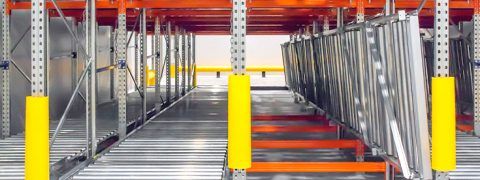
Live Pallet Racking (AR Live Storage FIFO) is a compact, high-density system with inclined roller beds that allow pallet loads to slide smoothly under gravity.


Designed for strict FIFO stock rotation, it maximises warehouse capacity, reduces handling time and is particularly suited to industries with high product turnover or demanding short shelf-life requirements.

Live Storage Pallet Racking (FIFO) live pallet racking is a high-density storage system perfect for storing homogeneous pallets.

Description

This system uses the FIFO (first in, first out) method, where the loading area is at the opposite end of the unloading area and the goods are transported through this space thanks to the roller beds that form a rail with an incline.

As a complement to Live Pallet Racking FIFO there is also Push-Back Racking LIFO which uses the LIFO system (last in, first out) and therefore has a single loading and unloading point; goods are stored by pushing the previous ones towards the back.

More information about Live Storage solutions on our Blog: Type of Live Storage systems

Palletised
Palletised or heavy loads
Compact system
Compact system
FIFO
FIFOstock management
5 years
5 yearswarranty

Live Pallet Racking FIFO - AR Live Storage

The Live Pallet Racking or FIFO dynamic pallet racking system is a compact structure with a slight incline and roller conveyors that allow palletised products to slide freely.

Loaded pallets enter the structure on one end and move securely along the roller conveyors at a controlled speed, moved only by the force of gravity, until they reach the other end, ready for removal.

The movement of the load units in the live pallet racking systems AR Live Storage (PAL) is absolutely secure since the structure is equipped with a series of technical and organisational measures for control and protection.

It operates by the palletised loads entering the structure at the higher level of the two ends.

The unit load moves by the force of gravity of the roller conveyors, but at a safe and controlled speed with the help of the live pallet racking braking and safety systems.

When the pallet reaches the opposite end, it stops thanks to the retainer or the last pallet deposited and it is then ready to be removed.

In order for the loading, unloading and movement of the unit loads in the live pallet racking system to be carried out in complete safety, the structure is provided with a series of technical and organisational control and protection measures.

Other design options

Live pallet racking systems can vary from their original design according to each customer’s specific storage needs.

Push-Back Management (LIFO)

A Push back system based on LIFO warehouse management (Last In, First Out) can also be installed.

The main difference is that only one aisle is used for work as loading and unloading take place in the same area.

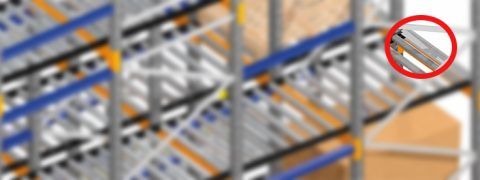
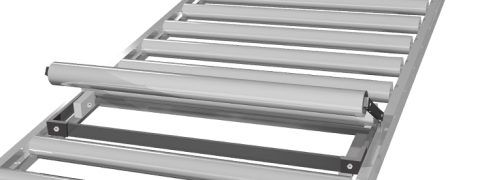
Folding Rollers

The folding roller system allows roller conveyors to be moved and raised for cleaning and maintenance, and to access the warehouse floor.

All this while maintaining the same technical characteristics and system operation.
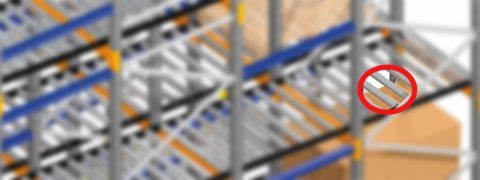
Split Rollers

Split rollers can be installed in the loading and unloading areas of live pallet racking systems to simplify the work of forklift and pallet trucks.

They also prevent roller damage.

Floor Level Pick-Up

Sometimes warehouses with dynamic racking systems need the load units to be picked up at ground level. To simplify this operation, a special pallet output area can be added.


Advantages of the Live Pallet Racking system:

The advantages of Live Pallet Racking FIFO are their compaction, time savings and good stock management.

  • Reduced loading and unloading times.
  • Increased storage capacity in a warehouse with adjustable pallet racking.
  • Enabling of loading and unloading aisles reduces risks for the operator.
  • Live pallet racking system can be automated.
  • Optimal use of space. High-density storage system, so more storage capacity in the same space
  • Ideal product rotation: Perfect for FIFO systems (first-in, first-out).
  • Fast, simple removal. Ideal positioning of the products reduces load manoeuvre and extraction times.
  • No traffic interference. The forklift trucks insert and remove load units in different aisles since the loading and unloading aisles are separate.
  • Adaptable to any space, and to any weight or size of the merchandise to be stored.
  • Extremely safe. The Live pallet racking structure is fitted with a control and braking system to minimise any risks: brake rollers, pallet centring or retainer system, and pallet stops.
  • Improved stock control since each loading aisle has a single product reference.
  • Dynamic pallet system is compatible with other automatic and conventional storage systems.
  • Allows you to continue to use the same type of forklift trucks used in adjustable pallet racking warehouses.
  • Reduced operating costs thanks to excellent use of space.

Main applications for Live Pallet Racking FIFO

Live Pallet Racking systems significantly optimise the space available in the warehouse, but live pallet racking FIFO in particular, due to its stock management method, is especially recommended in the following circumstances:

  • Storage of goods with an expiration or best-before date, due to its excellent stock management. The first products to enter will be the first to leave the warehouse.
  • Warehouses for companies in the Food, Medicines, Cosmetics sector or sectors whose products become obsolete or “go out of style” very quickly.
  • Storage in intermediate or transition zones between several areas within the same warehouse, to facilitate the fast movement of the unit loads.
  • Storage in order, waiting or dispatch areas in the warehouse; live pallet racking FIFO facilitates the flow of goods.
  • Possibility of installation in warehouses with cold rooms or freezing chambers.
System structure of the Live Pallet Racking

System structure of the Live Pallet Racking

The Live Pallet Racking system has a basic structure of frames, uprights and dynamic profiles, similar to other storage systems in the AR Racking range.

Its most common applications are for the storage of perishable products that require perfect turnover and waiting and intermediate warehouses.

AR LIVE STORAGE (PAL) live pallet racking systems have a base structure made up of frames, beams and dynamic profiles, similar to the rest of the storage systems in the AR Racking range.

Together with the basic structure, this dynamic racking system also includes a large variety of specific elements for safe, controlled displacement of the load units.

Main components that make up this live pallet racking system are:

Galvanised frame

The galvanised frame is one of the basic components of the structure and consists of 2 uprights, their diagonals, baseplates and floor fixing elements.

The frames will be anchored to the floor for greater rigidity of the structure.

Beam

Beams are the horizontal elements that support the load (in the case of live pallet racking FIFO indirectly) and that join the frames together.

In live pallet racking, the beams support the roller beds on which the unit loads will move.

Beams have connectors that fit into the drill holes of the upright and make the system more secure.

With a wide range of types, lengths and load capacities we adapt to the specific needs of each warehouse.

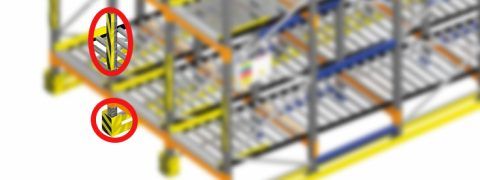
Live pallet racking protectors

These can be side or upright reinforcement protectors and are passive safety elements that protect the live pallet racking from potential damage from forklift impacts.

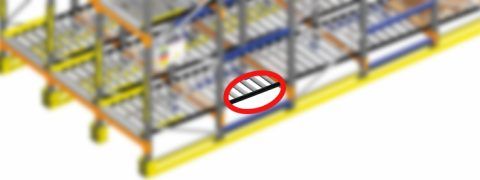
Profile

Component anchored to the beams of each of the level ends and on which the rollers that move the racking are supported.

Pallet guidance

It is situated at the front of the roller bed and helps operators when depositing the unit loads, preventing them from veering from their correct course. These elements also protect the structure against potential impacts.

Rollers

Essential element in live pallet racking FIFO, designed in steel and anchored to the rails along the entire level to facilitate movement by gravity.

Brake rollers

Safety element repeatedly placed along the roller bed, and whose objective is to control the speed of the unit load as it moves from one end of the rack to the other.

Pallet backstops

Component located at the end of the roller aisle and whose objective is to stop the pallet; it means the pallet can move no further and is ready for removal.

Pallet retainer

Optional component whose function is to separate the unit loads compacted at the end of the aisle and distribute the pressure among all of them.

Live pallet racking FIFO systems comply with the strictest European safety standards, and also come with AR Racking’s quality guarantee.

100% automated production

The production process of the basic components of our live pallet racking is fully automated in our factory: it incorporates state-of-the-art profiling machines with a continuous cutting process and laser measurement control, welding centres and automated painting and packaging processes, which guarantee the highest quality parameters.

Designs in R&D&I Centre

Our live pallet racking systems are designed and calculated in our R&D&I technology centre where we have an expert team which allows us to tackle projects with the most complex logistics requirements.

Tests at Research and Testing Laboratory

The Research and Testing Laboratory developed in collaboration with the University of Mondragón provides our product area with the appropriate tools for the testing and analysis of our racking systems.

It simulates, calculates and researches the efficacy of the geometries, and makes full structural calculations on the behaviour of systems already installed.

5-year quality guarantee

The quality reliability of our live pallet racking solutions means we are able to offer 5-year guarantees of excellence against all types of manufacturing or hidden defects in the components of the main structure of our racking solutions.

Innovative component traceability system

The uprights and beams of our pallet racking systems include an innovative traceability system in the sector.

Thanks to this system, our storage system components have an identifying mark, which means that each upright and beam can be traced and documented from origin, and that information is therefore available on which component it is, its design and the raw material used in its manufacture.

Quality certificates of the Live Pallet Racking system:

  • ISO 9001: 2008
  • ISO 18001: 2004
  • OSHAS 18001: 2007
  • Welding certificate: UNE EN ISO 3834-2: 2006
  • Galvanized steel corrosion resistance certificate: UNE EN ISO 14713-1
  • Galvanized steel reaction to fire: EN 13501-1: 2007
image
image
Live Pallet Racking (FIFO) with low-emission steel

Live Pallet Racking (FIFO) can be developed using AR Racking D-CARB, reducing the carbon footprint associated with the racking steel while maintaining the system’s gravity-fed operation and FIFO stock rotation. AR Racking UK uses the name Live Pallet Racking (FIFO) for this system.

The installation retains its original design, capacity, safety standards and operational performance.

The low-emission steel used in the project is backed by documentation detailing the quantity supplied and the CO₂ savings achieved compared with conventional steel.

Speak to our team about adding AR Racking D-CARB to your Live Pallet Racking project.

References

Our projects and customers are our best ambassadors. Therefore as a result of the more than 26,000 projects carried out in over 60 countries, we have satisfied customers from various sectors: food and beverage, automotive, distribution, electronics, pharmacy and cosmetics, industrial and transport and logistics.

Some featured projects of Live Pallet Racking FIFO:

image
image

Frequently asked questions about Live Pallet Racking

FIFO stands for First In, First Out: the first unit load to enter storage is also the first to leave. In logistics, this principle is used to ensure orderly stock rotation, particularly for products with an expiry date, a preferred consumption sequence, or a strict traceability requirement.

In the warehouse, FIFO can be achieved through correct management of storage locations, SKU references, batches, and expiry dates. Where the operation demands it, FIFO flow can also be supported by storage systems that physically separate the loading and unloading points — such as FIFO live pallet racking — enabling a continuous and controlled flow of goods.

It is important to distinguish between the FIFO principle and the storage system: even in solutions not designed specifically for FIFO, correct rotation can be maintained through disciplined location management by reference, batch, and expiry date.

FIFO gravity flow racking is a high-density palletised storage system in which unit loads travel by controlled gravity along roller tracks with a slight incline. Each pallet is loaded at one end of the channel, advances progressively and safely via braking and control elements, and is ready for retrieval at the opposite end.

This configuration enables genuine FIFO management, optimises stock rotation, and increases storage density without requiring the forklift truck to enter the racking structure.

Unlike other compact systems, each pallet retrieved from the discharge face automatically creates a free slot at the loading face, allowing high channel occupancy to be maintained without blocking earlier batches. The trade-off is that the system requires two working aisles — one for loading and one for unloading.

FIFO live racking ensures that the first unit load to enter is the first to leave — a critical requirement in warehouses handling products with an expiry date, a best-before date, or a batch release requirement. By design, the system prevents older stock from being stranded behind newer arrivals, eliminating the need for manual rotation and reducing the risk of expired goods remaining in storage.

This is particularly valuable in food, pharmaceutical, and cosmetics distribution, where regulatory compliance and product quality depend on rigorous stock rotation.

The key difference lies in the stock management logic and the operating method. FIFO live racking uses two separate aisles — one for loading and one for unloading — ensuring genuine first-in, first-out rotation. Push-back racking operates from a single face and uses LIFO logic. Drive-in racking also operates from a single face with LIFO flow, but the forklift truck enters the structure to deposit pallets on support rails, which increases the risk of structural impacts.

For operations where stock rotation is critical, FIFO live racking is the recommended solution. Push-back and drive-in systems are better suited to products where FIFO is not a priority and high density is the primary objective.

The depth, incline, and capacity of the channels depend on variables including pallet dimensions, pallet weight, the specific product being stored, and the overall operational requirements. There is no single standard specification — each channel is designed and calculated individually.

AR Racking selects the appropriate roller track system, incline angle, and braking elements for each project to ensure that pallet movement is smooth, controlled, and safe throughout the full depth of the channel, regardless of load variation.

No. FIFO gravity flow racking operates by gravity alone, thanks to the slight incline of the roller tracks. No motors or electrical power supply are required for the pallet movement itself. The controlled descent is managed entirely by the mechanical braking and retardation elements integrated into the roller track.

This makes the system highly reliable, with minimal maintenance requirements compared with motorised alternatives, and no dependency on electrical power for the movement of goods within the channels.

FIFO live racking can be used with various types of handling equipment, provided the system is designed to accommodate them. Counterbalance forklift trucks and reach trucks are the most common choices for loading and unloading operations at the two separate aisle faces.

The choice of equipment influences the aisle widths, pallet overhang limits, and structural clearances, all of which are factored into the design by AR Racking’s engineering team.

In FIFO live racking, pallet movement is controlled by the combination of the channel incline, the roller track design, and a series of mechanical braking and retardation elements. These elements regulate the speed of descent as each pallet travels from the loading face to the unloading face, preventing excessive acceleration and ensuring a smooth, controlled flow.

Separators and anti-tipping devices can also be integrated to prevent pallets from colliding or overriding each other within the channel.

Yes. FIFO live racking can be integrated into automated environments, though it should be clarified that the pallet movement within the channels is always gravity-driven and does not require automation. What can be automated is the loading and unloading at the aisle faces — for example, by replacing forklift trucks with automated stacker cranes, AGVs, or other robotic handling equipment.

In these configurations, the FIFO live racking structure must be designed to meet the tighter tolerances and interface requirements of the automated equipment.

FIFO live racking is classified as a compact or high-density storage solution for palletised loads. It sits between conventional selective racking — which offers maximum accessibility but lower density — and fully compact systems such as drive-in racking, which maximises density but with more limited selectivity.

Within the compact storage category, it is distinguished by its genuine FIFO operating logic and the physical separation of loading and unloading aisles, making it particularly suitable for perishable goods, strict batch control, or operations where stock rotation is a primary operational requirement.